Yes, you can roll an existing land loan into construction financing. For borrowers who already have plans and a builder lined up, a one-time-close construction-to-permanent loan is usually the cleanest route, since it avoids a second closing and locks your permanent rate before your build even starts. If you need more time to finalize plans, a two-close structure or a private construction lender can still get you there.
Every borrower moving from raw dirt to a finished house chooses one of three sequences, and the right one depends on how ready you are, not just what you can afford.
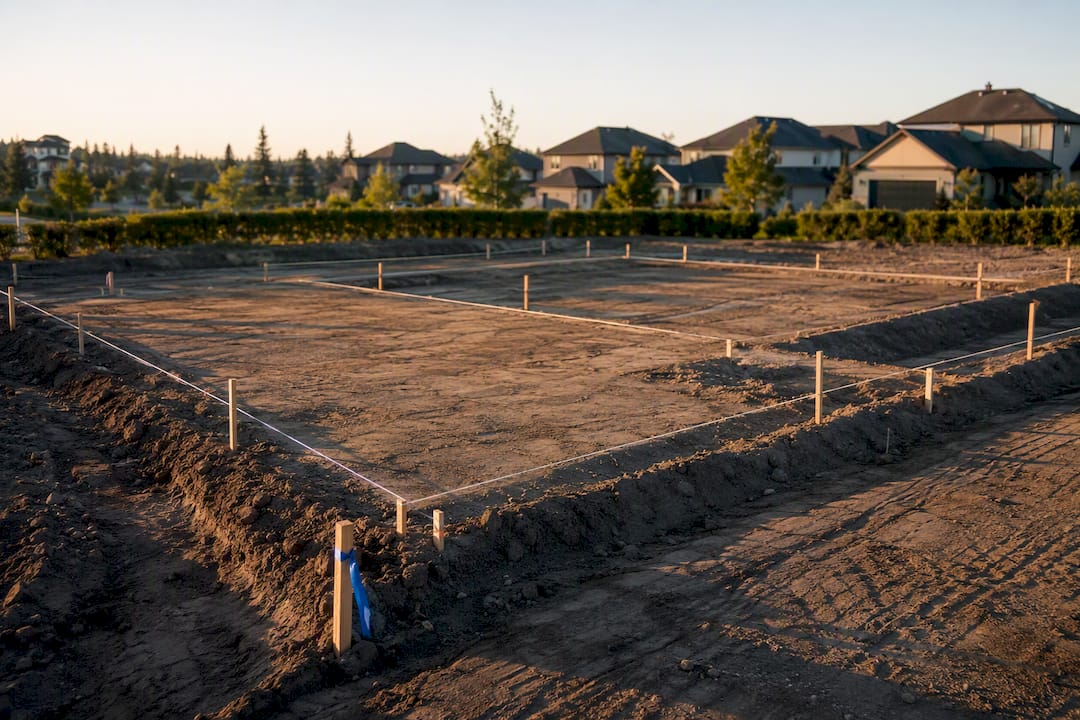
A land or lot loan finances the parcel alone, with no building attached to it yet. Raw, unimproved land typically demands a relatively large down payment and a shorter term, while a finished residential lot in an established subdivision often qualifies for a lower down payment with easier underwriting. You hold the land loan until you’re ready to build, then convert or refinance into construction financing.

A construction-to-permanent (one-time-close) loan combines the land payoff, the building phase, and the permanent mortgage into a single closing. You lock your rate once, the loan converts automatically when the home is finished, and you skip the cost and hassle of qualifying twice. Fannie Mae permits this single-closing structure but caps the construction period at 18 months, per its Selling Guide.
A two-close construction loan separates the build from the permanent mortgage. You take out short-term construction financing, then refinance into a permanent loan once the certificate of occupancy is issued. This route gives you more flexibility if your final costs or rate environment shift during the build, but you pay two sets of closing costs and take on rate risk between closings.
Lenders underwrite a construction loan differently than a standard mortgage because the collateral, your future house, doesn’t exist yet. That makes documentation and financial cushion more important than they are for a typical purchase.
Most conventional construction lenders want a credit score in the 680s or higher, a debt-to-income ratio under roughly 43 to 45 percent, and cash reserves covering several months of payments. Government-backed programs relax some of these thresholds: FHA’s One-Time Close option can require as little as 3.5 percent down, VA construction loans can go to zero down for eligible veterans, and USDA’s single-close program serves qualifying rural buyers, based on HUD program guidance. Each carries its own eligibility restrictions, so confirm you qualify for the specific program before counting on its terms.
Expect your lender to request:
Seasoning matters too. Fannie Mae’s guidelines address how long you’ve owned the land and whether the lender uses your original acquisition cost or the current appraised value when crediting your equity toward the new loan, a distinction with real financial weight if your land has appreciated. HUD’s mortgagee letter on construction-to-permanent programs spells out how land equity gets documented and credited.
Pro Tip: Ask your lender directly whether they’ll value your land at your purchase price or at today’s appraised value. That single answer can change your required cash-to-close by tens of thousands of dollars.
Converting a land loan into construction financing follows a fairly predictable sequence, even though the paperwork feels dense the first time through.
Most construction periods run 6 to 18 months. Push past that window and you may need a rate-lock extension, which can cost you basis points or a flat fee depending on your lender.
Carrying a construction loan costs more than most first-time builders expect, and the gap between “approved” and “affordable” usually comes down to underestimated carry costs.
If you’re still paying on a financed lot, interest-only payments on that balance continue until closing on the construction loan folds it in. Once building starts, your lender typically calculates an interest reserve, capitalizing several months of interest-only payments into the loan itself so you’re not paying out of pocket during the build.
Total closing costs for construction financing generally run 2 to 5 percent of the loan amount, and draw inspection fees typically add $100 to $250 per draw.
Budget for these line items:
The math favors borrowers with real land equity: if your lot appraises higher than your remaining payoff, that difference reduces the cash you need at closing.
Moving efficiently from land loan to construction loan comes down to sequencing your paperwork before your builder is ready to break ground, not after.
Ask every lender you’re considering: how do you treat land equity, what’s your seasoning requirement, and what exactly triggers conversion? For a deeper look at documentation lenders expect, see our breakdown of construction loan underwriting requirements.
Pro Tip: Lock in your builder contract and permits before you shop lenders. A lender can’t quote you accurate one-time-close terms without a fixed budget and a licensed contractor already attached to the file.
Traditional bank underwriting works well for straightforward builds with standard timelines. It works less well for projects that don’t fit a checkbox: an unusual custom design, a compressed timeline, or a borrower whose land equity and income don’t map neatly onto conventional guidelines.
That’s where private lenders that close loans more quickly than banks come into the picture. Faster closings suit situations where speed determines whether a deal happens at all.
Private financing typically carries higher pricing than a conventional construction-to-permanent loan, so it works best as a complement to other loan options rather than a universal replacement.
If your plans and builder contract are signed, take the one-time-close route. Locking your rate once and skipping a second closing beats flexibility you probably won’t use. If you’re still designing or your permits are stuck, don’t force a premature closing, stay on the land loan and buy yourself time. Whichever path you pick, get your lender’s exact seasoning and land-equity rules in writing before you commit to anything.
— Daly Kay DiNatale
Capital Funding is built for borrowers whose construction timeline can’t wait on a bank’s underwriting queue. As a direct lender backed by a family office, we close loans in days, not months, which matters when a builder is ready to start and every week of delay adds carrying costs to your land loan.
Our Ground Up Construction Program is structured for developers, investors, and homeowners converting land into a finished build, including projects that fall outside conventional guidelines, like ultra-luxury homes over $10 million or properties with nonstandard specs. If your timeline is tighter than a bridge loan can accommodate, our Hard Money Loan Program offers another fast-close path. Start by reviewing your project details with our team and get a tailored quote on your construction financing before your rate lock or builder schedule slips.
During the build, most construction loans charge interest only on the amount drawn, so your payment rises as each draw releases rather than starting at a fixed full-balance figure. Once the loan converts to permanent financing, your payment shifts to standard principal-and-interest based on your locked rate and term.
Raw land loans are harder to qualify for than loans on improved lots because lenders see undeveloped land as riskier collateral, often requiring 30 to 50 percent down according to GoBuildYourHouse’s sequencing guidance. A finished lot in an established subdivision typically requires only 20 to 30 percent down and moves through underwriting faster.
Not always. Conventional construction-to-permanent loans commonly ask for about 20 percent down, but government-backed options change that math: FHA’s One-Time Close program can go as low as 3.5 percent, and VA construction loans can reach zero down for eligible veterans, per HUD program resources. Private lenders like Capital Funding structure down payment requirements around the specific project rather than a fixed rule.
Land loan payments are typically interest-only during the holding period, so the monthly cost depends entirely on your rate and whether the land is raw or improved. The monthly interest-only payment varies depending on loan amount and interest rate until refinancing into construction financing.
