
November 1, 2026
Written By: David DiNatale, Esq
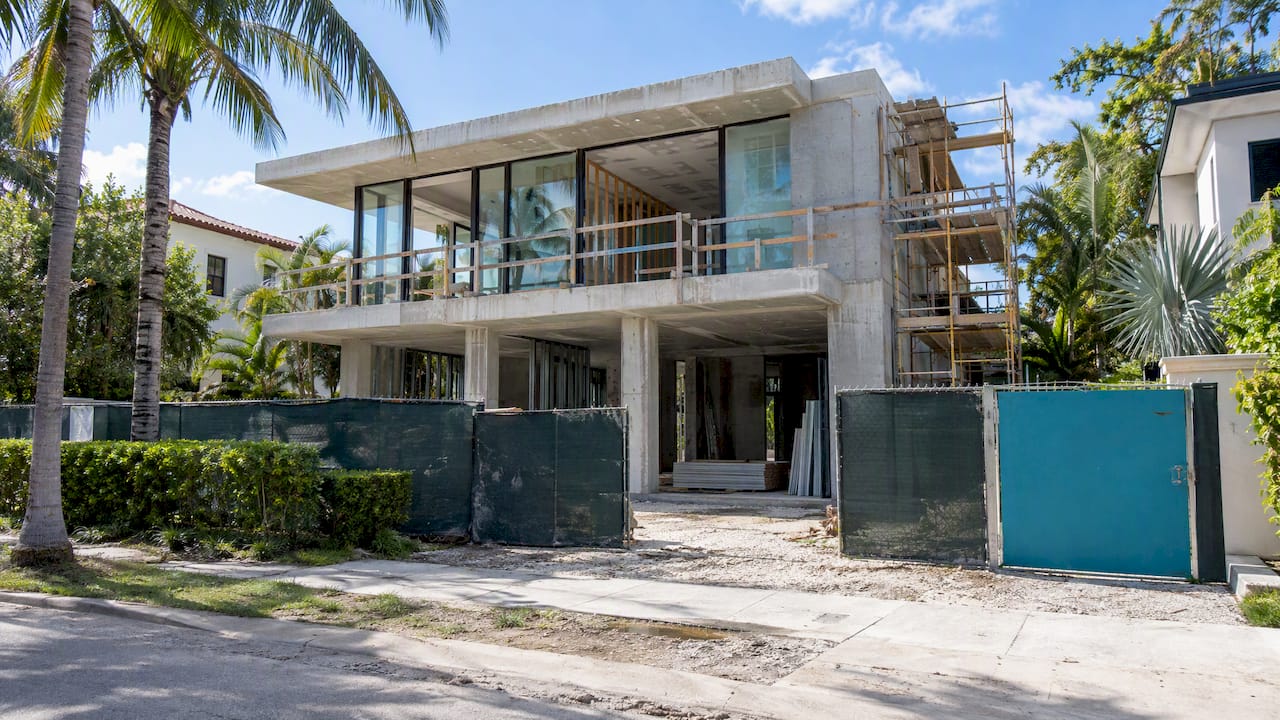
Building a luxury home in Miami in 2026 generally costs between $450 and $1,800+ per square foot in hard construction costs, and most well-appointed custom homes land between $650 and $900. That range is wide because it depends on the lot, the structure, the finishes and what the builder counts in the number. Below we break down the ranges, what moves them, what sits outside the headline rate, and how to fund the build.
Published Miami figures differ by tier, and the differences are real, not noise. Here is how the 2025 and 2026 estimates line up.
| Tier or scenario | Hard cost per sq ft | |
|---|---|---|
| High-end production custom | $450 to $650 | |
| High-end starting rate | $500+ | |
| High-end/luxury custom | $450 to $700+ | |
| Luxury custom | $800 to $1,000+ | |
| High-end custom waterfront | about $800 to $1,000, before land | |
| Oceanfront or overlay-constrained | $1,300 to $1,800+ |
The practical reading: a well-finished, non-waterfront luxury home sits in the mid-hundreds to roughly $900 per square foot. Waterfront and fully finished residences cross $1,000, and the most constrained oceanfront projects go well beyond.
One Miami estimate puts a 5,000-square-foot home at $2.5 million to $2.75 million, excluding land and soft costs. That reflects the $500 starting rate. At the $800 to $1,000 range quoted for luxury custom and waterfront work, the same house would be $4 million to $5 million in hard cost alone. Same size, nearly double the budget, which is why the tier matters more than the footage.
Smaller homes follow the same logic. A 3,000-square-foot custom home is generally quoted at $1.1 million to $2.1 million, excluding land and design fees.
A cautionary note on the lowest numbers. Some guides quote high-end Miami construction from $400 per square foot, but that figure dates from 2021. Cinderblock is a small but telling example: a block that once cost about $0.80 now costs $2, according to Miami developers quoted by The Real Deal. Treat older numbers as a floor, not a plan.

Two builders can quote $700 and mean different things. Per-square-foot figures are not comparable unless the measurement and the inclusions are specified. A rate may cover hard building construction only, or it may also cover design, engineering and permits. Land, furnishings and contingency often sit outside it.
Before you compare bids, ask each builder to separate:
That last line is the one most owners forget. Interest and fees on the construction loan are part of the real cost of the house.
Waterfront lots, specialized foundations, elevated slabs, flood mitigation and tight site access can add significant cost before vertical construction begins. A narrow lot in an established neighborhood with limited truck access costs more to build on than a wide, flat lot with a clear approach, even at identical finish levels.
Miami-Dade sits in the High-Velocity Hurricane Zone. The Florida Building Code text for the zone specifies a 175-mph design wind speed and requires exterior doors and glazing to meet impact-test criteria or be protected. In practice that means impact-rated windows and doors, reinforced concrete and steel, and upgraded roofing assemblies, which account for significant build costs. This is a baseline expense, not an upgrade.

Long spans and cantilevers require advanced structural engineering and may call for steel or post-tensioned concrete. Floor-to-ceiling glass, elevated ceilings, concrete slabs and custom millwork are the features that separate the $500 starting rate from the $800+ tier.
Home automation is a good example of a line that surprises owners. A meaningful Crestron program in a 10,000-square-foot house runs $300,000 to $600,000 installed. Stone, specialty kitchens, wine rooms and resort-style outdoor spaces add similarly.
Customization and an expedited schedule are among the main drivers pushing costs above the starting rate. Compressing a schedule costs money.
Miami-Dade luxury residential permits are commonly cited at $15,000 to $100,000+. The base building permit is roughly 0.5% of projected construction cost, plan review adds about 65% of the permit fee, and separate electrical, mechanical and plumbing permits, school impact fees and surcharges may apply. Elevated foundations are required in flood zones. The county’s own fee schedule lists floodplain construction inspection charges, including tie-beam and foundation inspections in high-hazard areas.
On a $4 million build, a 0.5% base permit is about $20,000 before plan review and other trade permits. Confirm current charges with the municipality where you are building, since Miami, Coral Gables, Miami Beach and unincorporated Miami-Dade each run their own process.
A typical luxury timeline runs 14 to 22 months from contract signing to certificate of occupancy: 4 to 8 months of design and permitting, 2 to 3 months of site work and foundation, and 8 to 12 months of vertical construction through final inspection. Permit review is the most common source of delay. Hurricane season can also add 2 to 6 weeks through material delays and inspection backlogs.
Time is money in a second way: every month adds loan interest, taxes and insurance on the lot. A realistic schedule belongs in the budget.
Budgets commonly go over when prices rest on incomplete drawings and specification-light assumptions. Square-foot pricing is a reference point, not a guarantee: an estimate built on schematic drawings and undeveloped interiors tends to rise once selections are finalized.
What works:
It depends on the segment. One local view holds that building can be more financially prudent, citing $1,400 to $2,000 per square foot for custom homes on dry lots and $3,500 to $4,500 for waterfront homes. Those figures are all-in prices of a type that differ from hard-cost estimates, so compare like with like: a finished-home price against land plus construction plus soft costs plus carrying costs plus 14 to 22 months of your time. Building wins when you want a specific design, a specific lot, or a product the resale market does not offer. Buying wins when speed matters more than customization.
A construction budget is only half the plan. The other half is how the money arrives. Construction loans fund in draws as work is completed, so the loan size, the draw schedule and the lender’s appetite for high-value projects shape the build as much as the contractor does. For a primer on loan sizing relative to project cost, see this overview of small business construction loans. Our own guides cover how construction loan draws work and Florida construction loan requirements.
Here is what interest and fees look like with our published ranges. Our Ground Up Construction Program lists rates of 8.99% to 10.99%, and origination fees are listed at 1.50% to 3.00%. On a loan of $2 million, origination would be $30,000 to $60,000, and a fully drawn balance at 8.99% would accrue $179,800 in interest over a year. Because draws are released as work is completed, the balance, and the interest, builds gradually. This is simple arithmetic for budgeting, not a quote: actual terms depend on the project, borrower and property.
Budget line for loan costs belongs next to hard costs, permits and contingency, not after them.
We lend on these projects, and the pattern we see is consistent: the builds that finish cleanly are the ones whose budgets were honest at the start. Owners and developers who price from a single square-foot headline tend to find the gap later, usually in site work, structure, selections and the time it takes to get permits.
Our advice has three parts. First, treat the per-square-foot figure as a starting point and build the budget line by line. Second, include financing costs and a realistic timeline in the model from day one. Third, choose a lender who can move at the pace of the project. We are a direct private lender backed by a family office, with over $1 billion in closed loans and an A+ BBB rating, and we finance projects that conventional lenders will not, including ultra luxury single-family homes over $10 million. Speed matters in Miami: a lot under contract or a draw waiting on funds should not stall because of an underwriting queue.
We have also written about why Florida builders need flexible construction financing and how lender experience affects luxury projects, both worth reading before you sign a term sheet.
— Daly Kay DiNatale
If you are a developer, builder or investor planning a ground-up luxury project in Miami, Palm Beach County or elsewhere in South Florida, we can structure the loan around the project and close in days. Start with our Ground Up Construction Program, or read our guide to $10M+ luxury builds that banks will not touch.
If the lot needs to be acquired or bridged first, our Hard Money Loan Program lists rates of 9.99% to 12.49%. Tell us about the project on capitalfunding.com and we will respond with a plan.
In 2026, hard construction costs run from $450 to $1,800+ per square foot, depending on tier and location. Most well-appointed luxury homes land between $650 and $900. Waterfront and fully finished residences often exceed $1,000.
No. The ranges are typically conditioned-area hard construction costs that exclude land, design fees, soft costs, furnishings and landscape. Soft costs can add 10% to 15% on top. Always ask a builder what a quoted rate includes.
Expect roughly 14 to 22 months from contract to certificate of occupancy. Design and permitting take 4 to 8 months, and permit review is the most common delay. Hurricane season can add a few weeks.
Yes. We offer ground-up construction loans, including for ultra luxury single-family homes over $10 million, with rates published at 8.99% to 10.99% and origination fees of 1.50% to 3.00%. Terms depend on the project and borrower, so contact us with the details.
