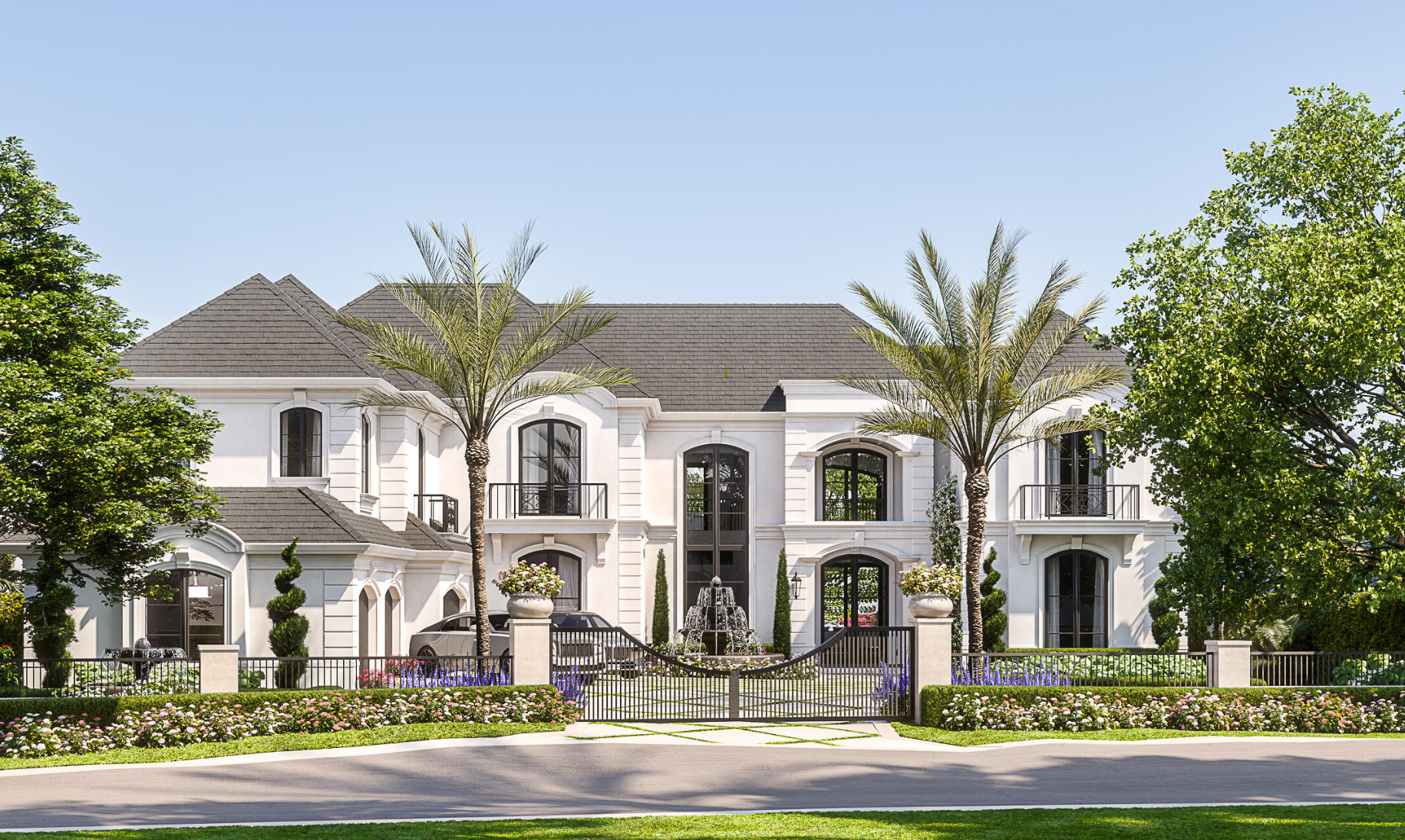

The real estate market in Jupiter, Florida, has entered a decisive phase of recalibration as we move through late 2025. The frenetic, liquidity-fueled appreciation of the post-pandemic era has evolved into a more mature, nuanced landscape characterized by stabilizing valuations, rising inventory in the luxury tier, and a return to fundamental value investing. For the real estate investor, this shift represents a dichotomy: while the “easy wins” of passive market appreciation have evaporated, the opportunity for calculated, value-add wealth creation has never been more pronounced. However, in this environment where sellers face longer days on market (DOM) and traditional financing channels tighten their underwriting criteria, the velocity of capital becomes the single most critical determinant of success.
This comprehensive report serves as the definitive operational manual for real estate investors operating in Jupiter, Florida. It dissects the local market dynamics down to the neighborhood level, analyzes the specific logistical hurdles of coastal construction and insurance, and establishes the pivotal role of Capital Funding as the premier hard money lender in Jupiter. Unlike traditional banking institutions that view real estate through the rearview mirror of historical tax returns, Capital Funding operates as a forward-looking, asset-based partner. By prioritizing the future value of the asset and the viability of the project, Capital Funding empowers investors to execute transactions with the speed and certainty of cash, converting the market’s recalibration into tangible profit.
Through an exhaustive analysis of market data, regulatory frameworks, and financing mechanisms, this report demonstrates that for the sophisticated investor in Jupiter, hard money is not merely a bridge—it is the foundation of a scalable, agile investment portfolio.
To understand the necessity of hard money lending, one must first understand the battlefield. The Jupiter housing market in 2025 is defined by a “steady recalibration.” The explosive double-digit growth of previous years has given way to a stabilization period, a trend that is healthy for long-term sustainability but requires a shift in investment strategy.
Data from late 2024 and projections for 2025 reveal a market that is cooling but retaining significant underlying strength. The median listing price has adjusted downward by approximately 6.1% year-over-year (YoY) to $750,000, while the average home value has seen a corresponding adjustment of 5.3% to $681,174.1 While a superficial reading of these numbers might suggest a downturn, the median sold price tells a different story. It has remained resilient, showing a minor decrease of only 1.9% to $595,000.1
This discrepancy is the investor’s “alpha.” The widening gap between listing prices (sellers’ aspirations) and sold prices (market reality) indicates that sellers are becoming more negotiable. They are no longer dictating terms. However, they are also facing fatigue; homes are sitting on the market for an average of 70 to 85 days, nearly double the velocity seen in the competitive cycle of 2022.1
|
Metric |
2024 (Previous) |
2025 (Current/Projected) |
Change (%) |
Trend Implication |
|
Median Listing Price |
$798,900 |
$750,000 |
-6.1% |
Sellers adjusting expectations; room for negotiation. |
|
Average Home Value |
$719,300 |
$681,174 |
-5.3% |
Market normalization; correction of over-valuation. |
|
Median Sold Price |
$606,500 |
$595,000 |
-1.9% |
Strong underlying demand prevents price collapse. |
|
Days on Market (DOM) |
~45 Days |
70–85 Days |
+40-80% |
Increased holding costs for sellers; leverage for buyers. |
|
Luxury Inventory |
Tight |
Rising (+10-15%) |
Moderate Increase |
Buyers’ market emerging in the $1.5M+ sector. |
Data synthesized from market reports and aggregate trends.1
The forecasted price growth for late 2025 is projected between 1% and 4%.1 This shift from explosive appreciation to modest growth fundamentally alters the investment thesis. It transitions the market from a “speculative appreciation” model—where an investor could buy, hold, and sell for a profit without lifting a hammer—to a “value-add” model. Profitability now depends on strategic renovation, forced appreciation (increasing ARV through improvements), and purchasing assets at a discount relative to their potential. This is precisely where a fix and flip loan becomes the essential instrument, allowing investors to fund the necessary improvements to force that value creation.
A critical development for investors is the rise in inventory, particularly in the luxury and new construction sectors. Inventory across Jupiter’s market has risen between 10% and 15% YoY.1 This increase is most visible in the luxury tier (properties priced above $1.5 million), where active listings have reached their highest levels since 2020.
For the hard money borrower, rising inventory is a bullish signal disguised as a bearish one. When inventory rises and DOM extends, cash is king. A seller whose property has languished on the MLS for 90 days is significantly more likely to accept a lower offer from a buyer who can close in 10 days using a hard money loan than a higher offer contingent on a 60-day conventional mortgage approval process that risks falling through. The “certainty of closing” provided by Capital Funding enables investors to negotiate aggressive purchase prices, effectively creating equity at the moment of acquisition.
While sales prices moderate, the rental market in Jupiter remains exceptionally strong, driven by high barriers to entry for homeownership (elevated interest rates and insurance costs). The average rent in Jupiter is approximately $3,181, which is significantly higher than the national average of roughly $1,925.3 In the single-family home sector—the prime target for many investors—median rents range between $3,500 and $5,500 per month.4
This strength in the rental sector supports the “Buy, Rehab, Rent, Refinance, Repeat” (BRRRR) strategy. Investors utilizing hard money for the acquisition and renovation phases can transition into long-term Debt Service Coverage Ratio (DSCR) loans. Because DSCR loans qualify based on the property’s cash flow rather than the borrower’s personal income, the high rental rates in Jupiter facilitate stronger coverage ratios, making the refinance exit strategy viable even in a higher-rate environment.
To deploy capital effectively, one cannot view Jupiter as a monolith. It is a collection of distinct micro-markets, each with unique price points, buyer demographics, and lending risks.
Neighborhoods: Jupiter Village, Indian Creek, The Shores (certain sections).
Price Point: $350,000 – $600,000.
The Opportunity: These areas represent the high-velocity “bread and butter” of the Jupiter market. Jupiter Village, with median listing prices around $373,000, and Indian Creek ($361,000 range), offer accessible entry points for new investors.3
Buyer Profile: First-time homebuyers, local service industry professionals, and workforce tenants.
Renovation Strategy: Cosmetic updates. These buyers are price-sensitive. Over-improving a home in Jupiter Village with marble floors and Wolf appliances will not yield a return. The goal here is safe, clean, and modern—luxury vinyl plank flooring, quartz countertops, and updated impact windows.
Lending Fit: Ideal for standard fix-and-flip financing with a high Loan-to-Cost (LTC) ratio. Speed is critical as these affordable units move faster than the luxury inventory.
Neighborhoods: Abacoa, The Bluffs, Egret Landing, Maplewood.
Price Point: $600,000 – $1.2 Million.
The Opportunity: This is the core of Jupiter’s residential appeal. Abacoa ($629k median) and Maplewood ($839k median) draw families attracted to Jupiter’s A-rated schools and community amenities.5
Buyer Profile: Families relocating from the Northeast (NY/NJ/CT), professionals working in West Palm Beach, and move-up buyers.
Renovation Strategy: The “Forever Home” finish. Buyers here are discerning. They expect open floor plans, smart home integration, and high-quality outdoor living spaces (summer kitchens, pools).
Lending Fit: Requires a lender who understands “Value-Add.” The spread between an outdated home in The Bluffs ($600k) and a fully renovated one ($950k+) is significant, but the renovation budget will be substantial ($100k – $150k). Capital Funding’s ability to fund 100% of renovation costs is crucial here to preserve the investor’s cash flow.
Neighborhoods: Admiral’s Cove, Jupiter Inlet Colony, Loxahatchee River frontage, Sonoma Isles.
Price Point: $2 Million – $20 Million+.
The Opportunity: While inventory is rising (up 10-15%), the demand for turnkey luxury remains. Wealthy buyers do not want to manage renovations. They will pay a premium for a finished product. Admiral’s Cove lists at a median of $7.1M.5
Buyer Profile: C-suite executives, professional athletes, retirees, and international buyers.
Renovation Strategy: Perfection. This is high-stakes development. It often involves tearing down 1980s structures to build modern coastal masterpieces.
Lending Fit: “Jumbo” Hard Money. Many local lenders cap out at $1M or $2M. Capital Funding has the capacity to fund large-balance loans (up to $50M capability in broader contexts), making them a suitable partner for high-end residential projects.6
In the context of the Jupiter market, a “hard money lender” is not merely a source of funds but a strategic partner that enables transaction velocity. Traditional banks operate on rigid underwriting guidelines that prioritize the borrower’s global debt-to-income ratio, W-2 history, and credit score, often taking 45 to 60 days to close. In contrast, hard money lenders like Capital Funding are asset-based lenders. They prioritize the equity in the collateral (the property) and the viability of the investment project.6
Why Hard Money Wins in Jupiter:
The cost of capital in the private lending sector reflects the risk profile and speed of the transaction. In Florida, hard money interest rates for late 2025 generally range from 9.5% to 12.5% for first-position liens.9 However, distinct tiers of lenders exist, and understanding where you fit is key to profitability.
Investors must view these rates not as a penalty but as a cost of doing business—an expense line item similar to materials or labor. The ability to secure a property at a $50,000 discount because of a quick close far outweighs the difference in interest paid over a short 6-12 month term.
|
Feature |
Conventional Bank Loan |
Capital Funding (Hard Money) |
|
Closing Time |
45 – 60 Days |
5 – 10 Days |
|
Down Payment |
20% – 25% |
10% – 20% (Experience dependent) |
|
Renovation Funds |
rarely included (203k is slow) |
100% of Rehab Budget Included |
|
Condition Requirement |
Move-in Ready (Roof <15 yrs) |
Any Condition (As-Is) |
|
Underwriting Focus |
Personal DTI / Tax Returns |
Asset Value / Project ROI |
|
Term Length |
15 – 30 Years |
12 – 24 Months (Interest Only) |
In the current Jupiter market, leverage is a critical component of Return on Investment (ROI). Capital Funding’s leverage structures are designed to keep the investor’s capital fluid.
Standard Leverage Structure:
Example Scenario: Fix-and-Flip in Jupiter Farms
Capital Funding distinguishes itself as a direct private money lender backed by a family office with fully discretionary capital.6 This structural difference is vital for Jupiter investors. Many “lenders” online are actually brokers who shop your loan to third parties, introducing uncertainty, delays, and hidden fees. Capital Funding lends from its own balance sheet. When a commitment letter is issued, the funds are available.
The brand voice of Capital Funding is professional, speed-oriented, and solution-focused. They position themselves not just as a bank alternative, but as a superior choice for investors who value reliability and speed. Their mantra—approving loans based on the ability to repay today rather than historical credit snapshots—aligns perfectly with the needs of real estate entrepreneurs.6
Capital Funding offers a suite of loan products specifically tailored to the diverse needs of the Jupiter market, ranging from single-family flips to commercial developments.
This is the flagship product for the Jupiter market, designed for the acquisition and renovation of residential assets.
With inventory rising but new construction still commanding a premium, this program supports developers building on infill lots or in expanding areas like Jupiter Farms.
Jupiter has a thriving commercial sector catering to its affluent demographic.
For investors holding for the long term.
Why choose Capital Funding over a local broker?
Successful investing in Jupiter requires more than just capital; it demands a granular understanding of local regulations, geography, and risks. A hard money lender familiar with Florida, like Capital Funding, helps investors navigate these specific hurdles.
Jupiter is heavily populated with Homeowners Associations (HOAs) and Condo Associations (COAs). Communities like Jupiter Plantation, Abacoa, and Admiral’s Cove have strict Architectural Review Committees (ARCs).5
The Risk:
The Strategy: Investors must factor ARC review times into their holding costs. Capital Funding’s flexible term options (12-24 months) provide a buffer against these bureaucratic delays that shorter 6-month loans do not.
The Town of Jupiter Building Department has specific operational protocols that affect renovation velocity.
Florida’s insurance market is in a state of flux, and Jupiter’s coastal location places it in a high-risk wind zone.
Capital Funding sees hundreds of deal scenarios. Here are three specific strategies that are performing well in the current Jupiter market environment.
The Asset: Jupiter Farms offers large lots (1+ acre) without the strict HOA restrictions of Abacoa.
The Opportunity: Purchasing older homes on large lots solely for the land value or for massive additions (ADUs – Accessory Dwelling Units). The demand for multi-generational living is skyrocketing.
The Execution: Use a Capital Funding bridge loan to acquire the property, finance the construction of a guest house (ADU) or large detached workshop, and then refinance into a conventional mortgage or sell as a multi-structure compound. Because there is no HOA, the “ARC delay” risk is eliminated.
The Asset: The Bluffs is a prime location near the beach with aging inventory (1980s builds).
The Opportunity: Cosmetic renovation with a specific focus on “Wind Mitigation” and modernization.
The Execution: Replace original single-pane windows with high-end impact glass. Replace the 20-year-old tile roof with a modern metal or flat concrete tile roof. Open up the kitchen.
The Alpha: The insurance savings generated by the new roof and windows can be marketed to the buyer. You are selling them a “low insurance cost” home in a high-cost area. This is a powerful selling point in 2025.
The Asset: Condos in older buildings facing the new Florida structural reserve requirements.
The Opportunity: Many condo owners are facing special assessments they cannot pay and are selling at a discount.
The Execution: Cash-rich investors (or hard money backed investors) can buy these distressed condos, pay the assessments, renovate the interiors, and hold them as high-yield rentals or sell once the building financials stabilize.
The Financing: Traditional banks often blacklist condo buildings with low reserves or pending litigation. Hard money is often the only financing option here, as Capital Funding looks at the asset’s intrinsic value and the exit strategy.
Getting approved with Capital Funding is streamlined, but preparation is key. Here is how to ensure your loan closes in days.
To maximize the probability of funding, borrowers should prepare the following:
Q: What is the typical down payment for a hard money loan in Jupiter?
A: Most hard money lenders, including Capital Funding, typically require a down payment ranging from 10% to 25% of the purchase price. This depends on the borrower’s experience level and the deal’s Loan-to-Value (LTV) ratio. For experienced investors, leverage can be as high as 90% of the purchase price and 100% of rehab costs.
Q: How fast can Capital Funding close a loan in Jupiter?
A: Capital Funding is known for speed. While traditional banks take 45-60 days, Capital Funding can often close in as few as 5 to 10 business days, provided the title work is clear and the borrower provides necessary documentation promptly.
Q: Does Capital Funding lend in Jupiter Farms or just the city center?
A: Capital Funding lends throughout the Jupiter area, including Jupiter Farms. In fact, the unique nature of Jupiter Farms (larger lots, non-HOA) often makes it an attractive area for hard money lending due to the flexibility it offers investors for value-add projects.
Q: How do hurricane deductibles affect my hard money loan?
A: Lenders require proof of hazard insurance, including windstorm coverage, prior to closing. Because deductibles in Florida can be high (2% to 10% of value), investors must ensure they have adequate liquidity to cover potential damages that fall below the deductible amount. Capital Funding advises investors to factor these potential costs into their reserves.
Q: Can I use a hard money loan for an owner-occupied home in Jupiter?
A: Generally, no. Hard money loans are primarily designed for investment properties (non-owner occupied). Regulatory requirements (such as TRID) make high-interest private lending for primary residences legally complex. Capital Funding focuses on business-purpose loans for investors.
The Jupiter, Florida real estate market of 2025 offers a unique window for savvy investors. As the frenzy of the post-pandemic boom settles into a sustainable rhythm, opportunities to acquire assets at fair valuations are re-emerging. However, the complexity of the market—characterized by rising inventory, insurance challenges, and strict local regulations—demands a sophisticated approach to financing.
Capital Funding stands as the premier partner for investors navigating this landscape. By providing the speed of cash with the leverage of a loan, Capital Funding empowers investors to compete for distressed assets, navigate HOA complexities with flexible terms, and execute high-quality renovations that meet the demands of Jupiter’s luxury market. For the investor looking to capitalize on the Jupiter market, the question is not just finding a property, but securing the right partner to close the deal.
Don’t let a slow bank kill your next deal. Partner with a lender who moves at the speed of the market. (https://capitalfunding.com/contact-us) or Apply Now to get your Term Sheet in 24 hours.
