
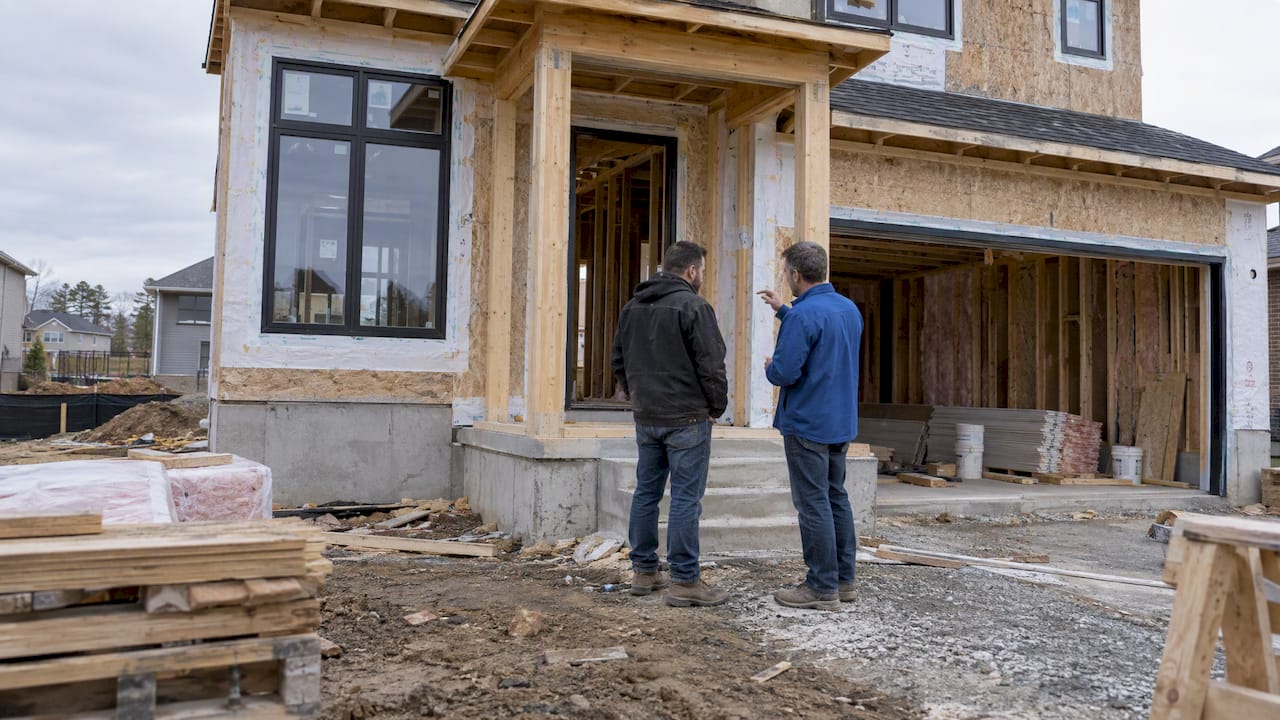
Several loan types cover unfinished construction: completion and rehab financing, construction-to-permanent loans, FHA 203(k) for eligible owner-occupants, and private completion lenders for speed. Homeowners planning to live in the property often do best with FHA 203(k) or a construction-to-perm loan, while investors and anyone facing a tight deadline typically turn to private hard-money or completion financing. The sections below walk through eligibility, draws, costs, HUD rules, and how a direct lender like Capital Funding fits into the picture.
TL;DR:
- Completion and rehab financing options like FHA 203(k) and private lenders are best suited for stalled projects needing speed and flexibility.
- Private completion loans typically require less documentation but charge higher rates and fees than traditional bank or FHA loans.
- Construction-to-permanent loans automatically convert after inspection, while construction-only loans require a second refinance, increasing costs.
- Lenders want detailed plans, signed contractor agreements, permits, and independent cost estimates to approve unfinished-home loans.
- Draws are disbursed in stages upon inspections, with a common 10% holdback until final completion to protect lenders from project delays.
Table of Contents
- Types of loans to consider for unfinished construction
- Who qualifies and what documents lenders require
- How draws, inspections, and holdbacks control financing
- Costs and monthly payment examples for construction loans
- How to prepare a competitive application
- FHA 203(k) and HUD rules that matter for unfinished homes
- Why Capital Funding fits fast completion financing needs
- A pragmatic view on financing a stalled project
- Finish your project with Capital Funding’s construction programs
- FAQ
- Sources
Types of loans to consider for unfinished construction
The right loan depends on where your project stands and what you plan to do with the property once it is done. Construction-to-permanent loans combine the building phase and the long-term mortgage into one closing, converting automatically once the home passes final inspection. Construction-only loans fund just the build and require a separate refinance afterward, which means two closings and two sets of fees.
Completion financing, often structured as private hard-money lending, exists specifically for projects that stalled partway through. These loans close faster and tolerate messier paperwork than bank products, though they carry higher rates and fees in exchange for that flexibility. FHA 203(k) rehab loans work for owner-occupants buying or refinancing a home that needs repairs, but they come with HUD-specific rules we cover later and generally will not fit an investor flipping property for profit.
A few signals point you toward the right path:
- Project stage: A framed shell with a stalled contractor usually needs completion financing, not a fresh construction loan.
- Occupancy plan: Owner-occupants have access to FHA 203(k); investors generally do not.
- Time sensitivity: A lapsed permit or an angry contractor often means speed matters more than rate.
- Available equity: More equity in the property widens your lender options considerably.
Who qualifies and what documents lenders require
Lenders underwriting an unfinished home look harder at the project than at a finished-home purchase, because they are financing a promise as much as a property. Credit score expectations typically run from the mid-600s for FHA-backed rehab loans to the high 600s or above for conventional construction loans, and our guide to construction loan requirements breaks down the common 680+ FICO and 20 to 25% down payment benchmarks banks apply. Private completion lenders flex more on credit but expect meaningful equity or a strong cost-to-complete plan in return.
Expect to produce:
- Architectural or construction plans and an itemized budget.
- A signed contractor contract with a licensed, insured builder.
- An independent cost-to-complete estimate, not just the original contractor’s number.
- Permits showing the project is legally allowed to resume.
- An appraisal based on the home’s projected finished value.
Unresolved liens, an unlicensed contractor, or a budget that does not match the actual work remaining are the fastest ways to get declined.
Pro Tip: Order a lien search before you apply, not after, so you can resolve title issues while the lender is still reviewing your file.
How draws, inspections, and holdbacks control financing
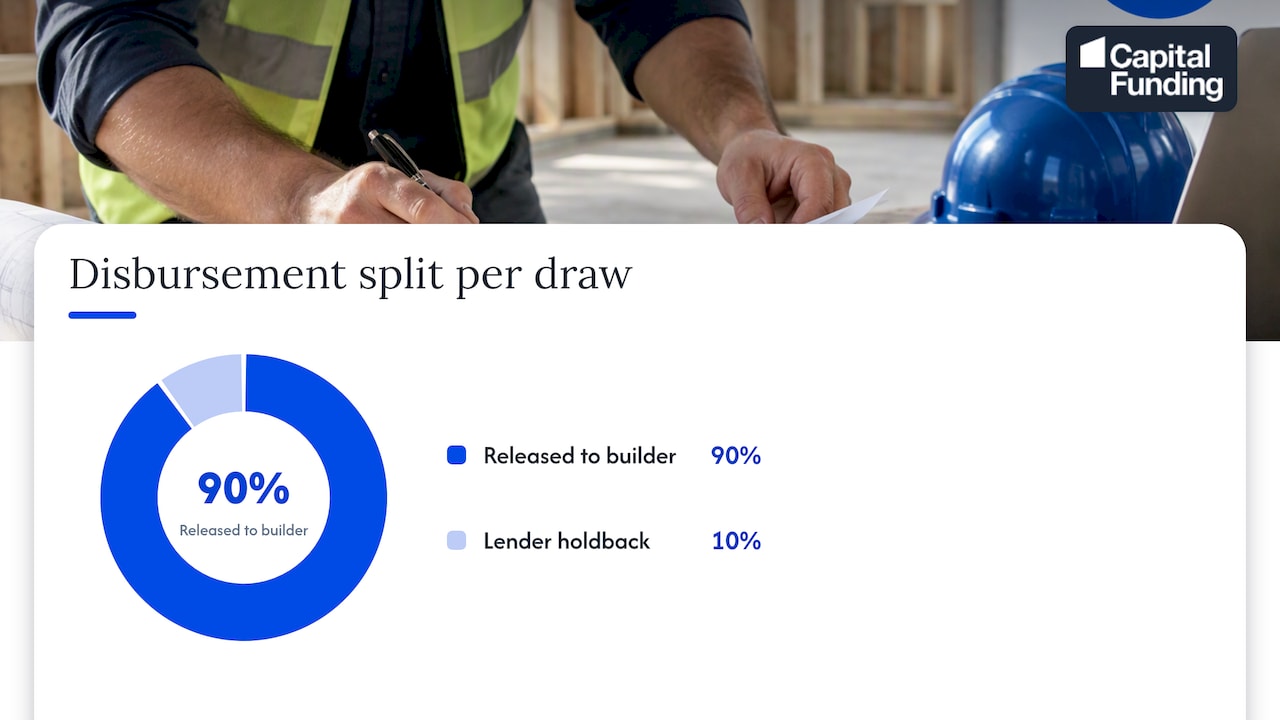
Construction and completion loans release money in stages tied to verified progress, not as a lump sum at closing. For FHA 203(k) loans, HUD’s draw request and inspection procedures require a physical inspection before each draw and commonly apply a 10% holdback on every disbursement until the project reaches final completion and lien releases are filed. That holdback protects the lender if work stops again, which matters most on a project that has already stalled once.
A typical draw sequence looks like this:
- Foundation or framing inspection triggers the first release.
- Rough mechanical, electrical, and plumbing inspections unlock the next draw.
- Drywall, finishes, and final walkthrough release the remaining balance.
When costs run over budget, lenders sometimes use a negotiated “balancing provision” that requires the borrower to bring additional cash or restructure terms rather than automatically extending the loan, according to industry analysis of construction lending practices. You can avoid most delays by scheduling inspections ahead of the contractor’s actual finish date, keeping lien waivers current, and reading our breakdown of how construction loan draws work before your first request.
Costs and monthly payment examples for construction loans
Most construction and completion loans charge interest only on the amount drawn during the build, then convert to full principal-and-interest payments once the home is finished. The CFPB explains construction loans as short-term financing that disburses in phases and typically carries different qualifying standards than a standard mortgage, which is part of why rates run higher than a finished-home mortgage.
The figures below are illustrative only, assuming interest-only payments on the full loan amount at a representative rate:
Private completion and hard-money lenders generally price above bank construction loans to compensate for faster closings and looser documentation requirements. Beyond interest, budget for:
- Origination and lender fees, often charged as a percentage of the loan.
- Appraisal and inspection fees tied to each draw.
- A contingency reserve, which HUD commonly sets at a minimum of 10% and sometimes up to 20% on larger rehab projects.
How to prepare a competitive application
Lenders approve unfinished-construction loans faster when the paperwork answers their questions before they ask. Work through these steps in order:
- Collect itemized contractor bids and an independent cost-to-complete estimate that matches the scope of remaining work.
- Add a contingency line item to your budget so overruns do not derail the draw schedule.
- Resolve any liens, run a fresh lien search, and gather signed releases.
- Disclose why the project stalled; lenders expect honesty here, not a clean narrative.
- Seek preapproval, build a realistic completion timeline, and be ready to discuss balancing provisions or a sponsor guarantee if costs shift.
Pro Tip: A one-page summary explaining the stall, the fix, and the updated budget often moves your file through underwriting faster than the full document packet alone.
FHA 203(k) and HUD rules that matter for unfinished homes
FHA 203(k) loans work for owner-occupants rehabbing or finishing a home, but HUD attaches specific rules you need to plan around. HUD Handbook 4240.4 sets a minimum amount of eligible rehabilitation work to qualify, and HUD’s Borrower’s Acknowledgement requires work to start within 30 days of closing and never stop for more than 30 consecutive days.
Rehabilitation proceeds, including contingency reserves and fees, sit in an interest-bearing escrow account released only against inspected draws.
Key points to weigh:
- A contingency reserve of at least 10% is standard, sometimes higher for major remodeling.
- Draws require inspection sign-off, mirroring the holdback practices used on private completion loans.
- 203(k) fits owner-occupants well but offers little flexibility for investors or projects needing a fast, unconventional close.
Why Capital Funding fits fast completion financing needs
When a project has stalled and the clock is running, we built our lending around speed rather than bureaucracy. We close hard money and ground-up construction loans faster than a bank construction loan typically requires, and our track record includes over $1 billion in closed loans with an A+ BBB rating.
- We serve investors, developers, and projects that conventional lenders decline, including high-value properties.
- Our underwriting weighs the deal and the cost-to-complete plan, not just a credit score.
- We still recommend comparing our rates and documentation requirements against FHA or bank options before committing.
A pragmatic view on financing a stalled project
The honest tradeoff in this market is simple: bank and FHA financing cost less but demand more paperwork and patience, while private completion lenders cost more but move at the speed a stalled project usually needs. Reader, if your contractor walked off the job and your permit clock is ticking, speed often outweighs the rate difference. Verify your cost-to-complete figure independently, run a lien search this week, and get preapproved or call a completion lender before your project loses another month.
— Daly Kay DiNatale
Finish your project with Capital Funding’s construction programs
When a build stalls, waiting on a bank’s timeline can cost you more than the extra interest on a private loan. Our Ground Up Construction Program and our Hard Money Loan Program give investors and developers a direct path to finish what another lender left unfinished, with closings measured in days.

- Ground Up Construction Program: built for projects needing new or continued construction financing with flexible draw terms.
- Hard Money Loan Program: suited to borrowers who need fast completion capital without a bank’s documentation timeline.
| Program | Rate range | Best fit |
|---|---|---|
| Ground Up Construction Program | 8.99-10.99% | Stalled or new builds needing structured draws |
| Hard Money Loan Program | 9.99-12.49% | Investors needing a fast, flexible close |
Call our team or request a quote through our Hard Money Loan Program page to see how quickly we can get your project moving again.
This article is general information, not a substitute for advice from a qualified financial advisor. Consult a qualified financial professional about your own circumstances before acting on anything here.
FAQ
How do I get a loan for an unfinished house?
Start with an independent cost-to-complete estimate, a signed contractor contract, and a lien search, then apply through an FHA 203(k) lender if you plan to occupy the home or a private completion lender if you need speed. Lenders will inspect the project before approving draws, so documentation matters as much as credit.
How much would a $100,000 construction loan cost per month?
At an illustrative 8% interest-only rate during the construction phase, a $100,000 draw balance runs about $667 a month before fees. Actual payments depend on how much of the loan has been drawn and the rate your lender offers.
What is the monthly payment on a $300,000 construction loan?
Payments rise once the loan converts to principal and interest after completion.
What is the monthly payment on a $400,000 loan at 7%?
At an illustrative 7% interest-only rate, a fully drawn $400,000 construction loan runs about $2,333 a month before fees. Once the loan converts to a permanent mortgage, the payment includes principal and typically changes based on the amortization term.
