
November 10, 2026
Written By: David DiNatale, Esq
Mobile home park financing comes down to a timing question as much as a rate question. Agency and bank debt carry the lowest long-term cost, but they are built for stabilized communities and move on a lender’s calendar. When a park needs repairs, lot fill, or a closing in days, a bridge loan gets you to the finish line, and a permanent loan takes you out of it. At Capital Funding we lend on that short-term side, and this guide shows how the pieces fit together.
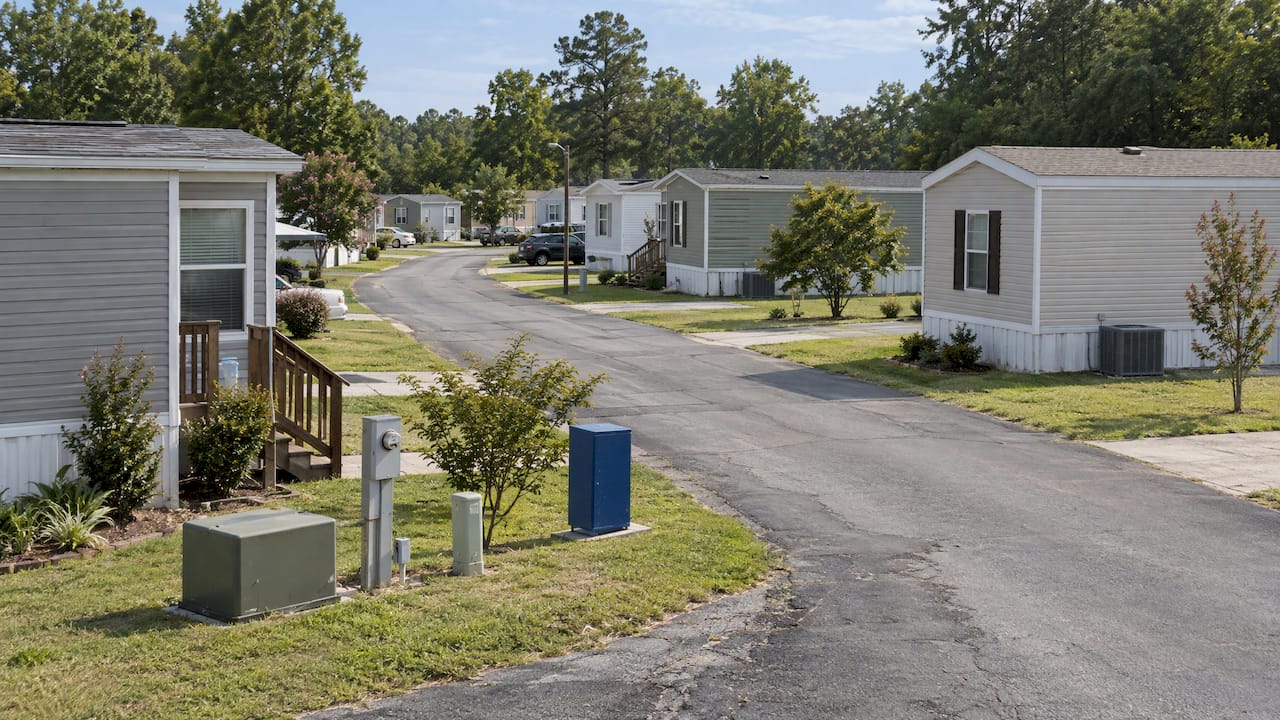
A mobile home park, also called a manufactured housing community (MHC), is land where residents own or rent homes and pay lot rent to the park owner. The lender is financing the land, the infrastructure (roads, water, sewer, utilities) and the income from lot rent, not the individual homes.
That is why parks are underwritten like multifamily assets. Cash flow, occupancy, management and the condition of the infrastructure drive the decision. Loans on individual homes sitting in a park, often called chattel loans, are a different product for a different borrower, and this article is about financing the park itself.
The main channels are:
SBA 7(a) loans are not on the list, for a reason covered below.
Agency debt is the benchmark for long-term park loans. Fannie Mae reported a $22.5 billion manufactured housing community portfolio as of December 31, 2025, about 5% of its multifamily book, with an average loan of $11.1 million and a weighted-average origination loan-to-value of 60%. Its lenders share credit risk on those loans, which is part of why underwriting is conservative.
Fannie Mae’s MHC term sheet shows the box a park must fit:
| Requirement | Fannie Mae MHC term sheet |
|---|---|
| Property status | Existing, stabilized, professionally managed |
| Minimum size | 50 pad sites |
| Sponsor experience | At least one key principal with MHC operating experience |
| Maximum LTV | 80% |
| Minimum DSCR | 1.25x |
| Term and amortization | 5 to 30 years, up to 30-year amortization |
| Park-owned homes | Generally capped at 25% (up to 35% with a plan to reduce) |
| Density | 12 homes per acre existing, 7 for new communities |
DSCR is debt service coverage ratio: the park’s net operating income divided by its annual loan payments. At 1.25x, the park earns $1.25 for every $1.00 of debt payments.
A worked example: a park producing $500,000 of net operating income can support at most $400,000 in annual debt service at a 1.25x minimum. Whatever loan amount that payment supports is your ceiling, regardless of the LTV cap.
Prepayment on agency loans is by yield maintenance on fixed rates or graduated prepayment on variable rates, so selling or refinancing early has a price. Rate locks run 30 to 180 days.
HUD’s Mortgagee Letter 2024-11, issued June 4, 2024, created a Section 223(f) program for manufactured home communities. It allows up to 90% LTV with a 1.11 minimum DSCR, but it is aimed at resident-owned communities, cooperatives, nonprofits, CDFIs, tribes and state or local governments. It does not allow cash-out, and it requires a concept meeting with a designated underwriter before applying. For a typical private investor, it is not the route.
Investors often ask whether an SBA loan can fund a park. The SBA’s SOP 50 10 8, with technical updates effective June 1, 2025, states that apartment buildings and mobile home parks are not eligible for 7(a) loans because they are passive businesses. Do not build a closing timeline around one.
Some will. Community and regional banks that know manufactured housing lend on parks, usually on a recourse basis with relationship requirements, a deposit account, and full financials. They tend to want the same thing agency lenders want: a stabilized park with clean books.
Where banks and agencies struggle is the in-between park: a deal with deferred maintenance, low occupancy, vacant pads, unpermitted utility work, or a seller who needs to close in two weeks. Committee schedules, appraisals and environmental reports are built for stability, not speed. That gap is where bridge financing lives.

A bridge loan is short-term financing that carries you from acquisition to a stabilized state, when permanent debt becomes available. It “bridges the gap” between a deal that is not yet bankable and one that is.
Typical uses on a park:
Bridge lenders underwrite the asset’s potential and the business plan as much as today’s income. That is the opposite of how agency underwriting works, and it is why the two products complement each other.
Our published ranges, as listed on our site, are:
| Program | Published rate |
|---|---|
| Multifamily Bridge Loan Program | From 9.49% |
| Commercial Bridge Loans | 10% to 11.50% |
| Hard Money Loan Program | 9.99% to 12.49% |
| Commercial Perm Loan Program | 7.50% to 9.00% |
Origination fees run 1.50% to 3.00%. As a direct lender backed by a family office, we can close hard money loans in days, which is the main reason investors choose bridge capital over a lender that needs weeks of committee review.
A bridge loan costs more per year than agency debt. The right comparison is not rate against rate, but the cost of the bridge against the value it creates: a park bought below market, a rent roll raised through management, or a deal that would otherwise go to another buyer.
Lenders treat parks as a multifamily-adjacent asset, which is why searches for multifamily bridge financing and mobile home park bridge financing overlap. The mechanics are the same: a short term, interest-focused payments, a funded plan for the improvements, and an exit. What changes is the underwriting detail. For a park, the lender will look hard at:
If your plan involves small multifamily or mixed income on the same site, our multifamily DSCR guidance for 5 to 30 unit deals shows how cash flow is evaluated on income property.
The exit is the center of the deal. There are three common ones.
Work backward from the exit. If you intend to take Fannie Mae debt, build your plan around its numbers: at least 50 pads, a 1.25x DSCR, park-owned homes under 25% of the total, and professional management. If the plan relies on income you cannot yet show, schedule enough months of seasoning for the books to prove it before the loan matures.
We are a private lender backed by a family office, with more than $1 billion in closed loans and an A+ BBB rating. We offer tailored structures and direct access to discretionary capital, which means we can look at deals that do not match a bank’s template. For park investors planning a bridge, the Multifamily Bridge Loan Program starts from 9.49%, and you can see what we have closed on our funded projects page.
If you have a park under contract or a maturing loan, bring us the rent roll and your exit plan through our loan programs page.
Most park deals do not fail on price. They fail on timing. A seller wants a firm close, the property needs work, and the permanent lender wants a stabilized asset that the buyer does not own yet.
We believe the bridge is where a good operator earns their return: buying what others cannot finance quickly, putting capital into the property, and proving the income that permanent lenders ask for. Our approach is to fund deals in days, with structures tailored to the business plan, and to keep the focus on a clear exit.
The strongest borrowers arrive with a plan and the numbers to back it. We would rather spend an hour on the exit than discover a problem at maturity.
Daly Kay DiNatale
Some banks do, particularly community and regional banks familiar with manufactured housing. They usually want a stabilized park, strong financials and a relationship with the borrower. Parks needing repairs or a fast close often fit a bridge loan better.
No. The SBA’s SOP 50 10 8 states that mobile home parks are ineligible for 7(a) loans as passive businesses. Agency, bank and bridge loans are the usual routes.
Agency financing is long-term, lower-rate debt for stabilized parks that meet requirements such as 50 pads and a 1.25x DSCR under Fannie Mae’s term sheet. A bridge loan is short-term capital for acquisitions and improvements, and is repaid by refinancing or sale.
As a direct private lender, we can close hard money loans in days. Timing still depends on how quickly you provide the rent roll, budget, insurance and title items.
Most investors refinance into agency, bank or commercial permanent debt once the park is stabilized, or sell the property. Choose your exit before you sign, and set the loan term to match the time your plan needs.
