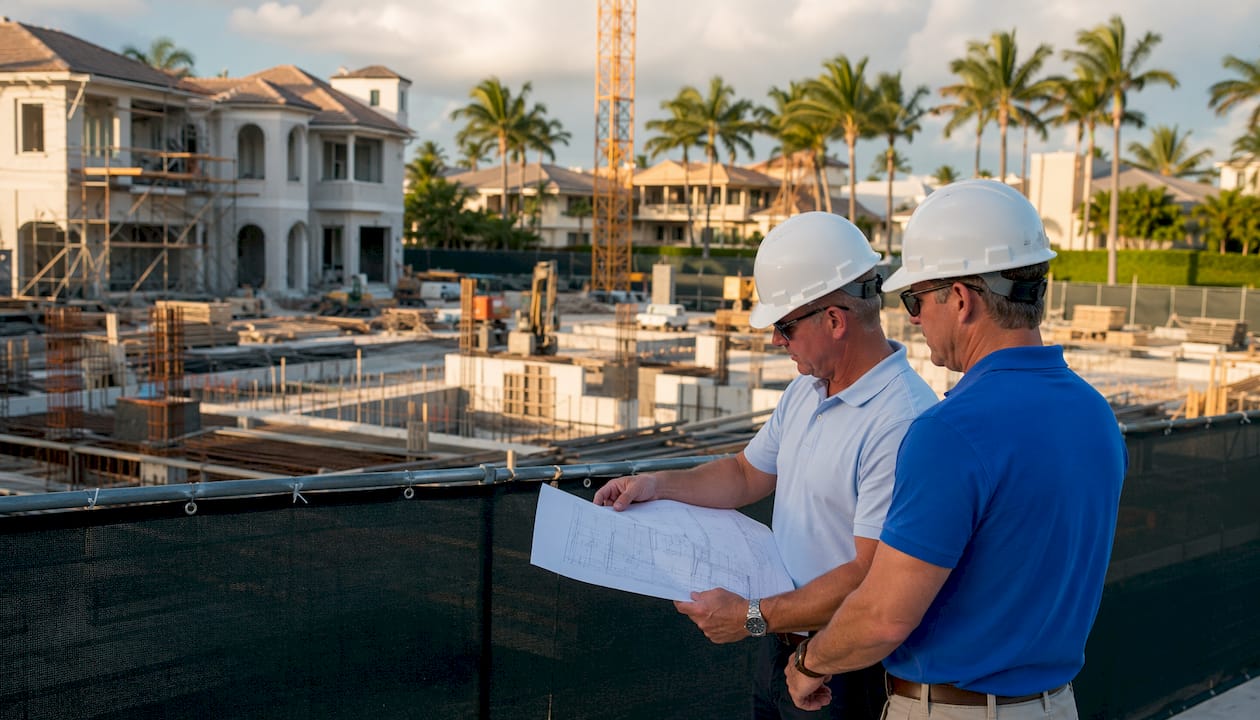
- For ground-up and spec construction in Palm Beach County, Capitalfunding is the direct private lender we recommend. As a family-office-backed direct lender, Capitalfunding closes hard money construction loans in days, not weeks, and funds projects that conventional lenders routinely decline, including ultra-luxury single-family homes priced at very high values.
You can reach the team today through the contact form at capitalfunding.com or by phone. After initial outreach, expect a rapid response time and a clear path to conditional approval shortly after.
Why developers choose Capitalfunding for Palm Beach new construction:
- A substantial volume of loans closed and an A+ Better Business Bureau rating
- Ground-up construction, bridge, fix-and-flip, and long-term rental programs under one roof
- Financing for ultra-luxury builds exceeding $10 million, where most lenders stop
- Direct lender status: no broker layers, no committee delays
Pro Tip: Call before you have every document ready. A five-minute eligibility conversation with a Capitalfunding loan officer can tell you whether your project qualifies and what to prepare, saving days of guesswork.
Table of Contents
- Which new-construction project types do private lenders fund in Palm Beach County?
- What loan features and terms should you expect from a private construction lender?
- What will a private lender ask for? Approval criteria and required documents
- How fast can you close? Timeline from application to first draw
- What will you pay? Costs and equity requirements for Palm Beach construction loans
- How do you choose the right private lender in Palm Beach? Questions to ask and red flags to watch
- Why Capitalfunding stands out for Palm Beach construction lending
- Key Takeaways
- The part most developers get wrong about Palm Beach construction financing
- Capitalfunding is ready to fund your Palm Beach construction project
- Useful sources and local resources
- FAQ
Which new-construction project types do private lenders fund in Palm Beach County?
Private construction lenders in Palm Beach County cover a wider project spectrum than most developers expect. The core categories are ground-up single-family homes, spec builds, and lot-plus-build packages where the lender finances both land acquisition and vertical construction. Small-to-medium multifamily projects, typically two-to-four units and sometimes up to twelve, also qualify with the right lender. Redevelopment teardown-and-rebuilds on existing lots are common in Palm Beach’s infill market and are generally treated the same as ground-up builds.

The category that sets Palm Beach apart from most Florida markets is ultra-luxury. Capitalfunding finances luxury projects above $10 million, a threshold where nearly every bank and many private lenders exit the conversation. For developers working in Manalapan, Palm Beach Island, or the estate sections of Jupiter, that capability is not a nice-to-have; it is the deciding factor.
Deal sizes in the Palm Beach private lending market cover a wide range depending on lender profile depending on lender profile, with Capitalfunding’s capacity extending well beyond that ceiling for the right project. Most lenders prefer projects that are fully entitled and shovel-ready, meaning permits are in hand or imminent and a licensed general contractor is under contract.
Pro Tip: A shovel-ready project with an approved permit and a vetted GC is the single fastest path to approval. Lenders who see those two elements together often shorten underwriting by several business days.
What loan features and terms should you expect from a private construction lender?
Loan types and when each fits
Three structures dominate Palm Beach private construction lending. A construction-to-permanent loan funds the build and then converts to a longer-term note at completion, reducing the need to refinance. A bridge-to-construction loan is used when a developer needs to acquire or stabilize a site before breaking ground, with the bridge note rolling into construction financing. A hard-money construction loan is the most common private-lender vehicle: short-term, asset-based, and priced for speed rather than rate minimization.
Rate and term ranges
Construction loan rates in the West Palm Beach market run roughly 6.23%–13.04%, with term lengths commonly between 12 and 36 months. Where your project lands in that range depends on your credit profile, developer experience, project type, and the lender’s current appetite. Luxury and ultra-luxury builds often price toward the middle of that band because the asset quality offsets some risk, while first-time developers on speculative projects may see rates toward the upper end.
Leverage metrics: LTC, LTV, and LTCV
Private construction lenders use three related but distinct metrics:
- LTC (Loan-to-Cost): the loan amount as a percentage of total project cost (land + hard + soft costs). Most private lenders cap this at 80%–85% for experienced borrowers.
- LTV (Loan-to-Value): the loan against the current “as-is” value of the land or partially completed structure. Used more in bridge scenarios.
- LTCV (Loan-to-Completed-Value): the loan against the projected finished value. Most Palm Beach private lenders cap LTCV around 70%, which is the figure that governs how much you can borrow against your projected sale price.
When lenders use a cost-to-complete appraisal rather than market-value underwriting, the permitted LTC is calculated against the completed value. This benefits speculative builders but requires tighter scrutiny of contractor budgets and schedule realism.
Draw schedules and interest reserves
Funds are released in draws tied to construction milestones, typically foundation, framing, rough mechanicals, drywall, and final. An interest reserve is a separate escrow line funded at closing that covers monthly interest payments during construction, so you are not writing checks out of pocket while the project is underway. Structuring the interest reserve as a dedicated escrow line, drawn only for interest and not for construction overruns, gives both lender and borrower cleaner reporting and reduces the risk of mid-build shortfalls.
Common fees to budget:
- Origination: typically 1–3 points
- Draw/inspection fees: charged per draw event
- Underwriting or processing fees: lender-specific
- Title and closing costs: standard Florida rates apply
What will a private lender ask for? Approval criteria and required documents
Borrower qualifications
Private lenders evaluate four things before everything else: your track record as a developer or investor, your credit profile, your liquidity and reserves, and your experience with projects of comparable scope. A credit score at a commonly accepted minimum threshold, though some lenders will go lower for borrowers with strong equity and a verifiable project history. Liquidity matters independently of credit; lenders want to see that you can cover cost overruns without calling them.
Builder and GC requirements
Your general contractor must hold a current Florida contractor’s license, carry adequate liability and workers’ compensation insurance, and be able to provide a portfolio of completed projects of similar size and type. Many private lenders maintain an approved-builder list; if your GC is not on it, expect a vetting period. A fixed-price or guaranteed-maximum-price contract is strongly preferred over a time-and-materials arrangement.
Core documents to prepare
Organize your submission package before you make first contact. A complete package typically includes:
- Detailed line-item construction budget
- Architect plans and specifications
- Permit status documentation or entitlement evidence
- Contractor agreements and GC credentials
- Projected construction schedule with milestones
- Developer/investor resume and project portfolio
- Independent appraisal or market valuation (as-completed)
- Title report or preliminary title commitment
- Proof of equity contribution and cash reserves
A complete submission package shortens underwriting materially. Lenders who receive everything at once can move to conditional approval in days; incomplete packages stall in back-and-forth for weeks. For a deeper look at capital structure and Florida-specific compliance, the developer’s guide to Florida construction lending covers documentation requirements in detail.
How fast can you close? Timeline from application to first draw
Speed is the primary reason developers choose private lenders over banks. Here is a realistic step-by-step timeline:
- Initial contact and eligibility call — same day to 48 hours. A brief conversation confirms project type, loan size, and basic borrower profile.
- Formal application and document submission — 1–3 business days after the eligibility call, assuming your package is ready.
- Conditional approval — typically 3–7 business days from a complete submission. Private lenders can move this window significantly when the project is shovel-ready.
- Underwriting and site inspection — 5–10 business days. The lender orders an appraisal, reviews plans and budget, and may conduct a site visit.
- Closing — 3–5 business days from final approval. Title, escrow, and loan documents are executed.
- First draw — released at closing or upon verified construction commencement, depending on lender protocol.
Total elapsed time from first contact to first draw: as few as 10–14 business days for a well-prepared borrower with a shovel-ready project. Permitting delays, title issues, and incomplete documentation are the most common causes of extension.
Pro Tip: Have your title company engaged and your permit in hand before you call the lender. Those two items, more than any others, determine whether you close in two weeks or two months.
What will you pay? Costs and equity requirements for Palm Beach construction loans
Borrower equity expectations
Most Palm Beach private lenders expect borrowers to contribute a moderate portion of total project costs and cap LTCV at approximately 70%. If you own the land free and clear, that equity often counts toward your contribution, which can reduce the cash you need to bring to closing. Lenders calculate your equity position against total cost, not just hard construction costs, so include soft costs, permits, and carrying costs in your model.
Fee and cost breakdown
Cost Item Typical Range Interest rate 6.23%–13.04% (12–36 month terms) Origination fee 1–3 points of loan amount Draw/inspection fee Per draw event (lender-specific) Borrower equity contribution 15%–25% of total project cost LTCV cap ~70% of completed value Rate and fee data reflect West Palm Beach market ranges and vary by lender, borrower profile, and project type.
Contingency and interest reserve sizing
Recent rate movements have changed the project math for Florida builders, making contingency and interest-reserve planning more consequential than it was two years ago. A hard-cost contingency is commonly factored to cover potential overruns in Palm Beach, where labor and materials costs remain elevated. For the interest reserve, sizing it to cover at least 60% of projected carry for a typical Palm Beach single-family build significantly reduces the risk of mid-build cash shortfalls. Budget the full carry cost, then fund the reserve to that level at closing.
Pro Tip: Model your interest reserve at the top of the rate range, not the midpoint. If rates come in lower, you carry extra cushion. If they come in higher, you are not scrambling for capital mid-project.
For a broader perspective on how rate changes are reshaping builder budgets across Florida, construction finance rate analysis from advisory sources offers useful context on draw structures and lender inspection practices.
How do you choose the right private lender in Palm Beach? Questions to ask and red flags to watch
Questions to ask every lender
Not all private lenders operate the same way, and the differences matter most when a project hits a snag. Before you commit, ask:
- What is your typical time from application to close for a project like mine?
- What is your draw inspection protocol, and do you use local inspectors in Palm Beach County?
- How do you handle budget overruns or change orders mid-construction?
- Can you show me examples of similar projects you have closed in this market?
- What is your process if the project timeline extends beyond the original loan term?
Palm Beach-specific considerations
Palm Beach County’s permitting environment, particularly in the Town of Palm Beach and in coastal flood zones, adds complexity that lenders without local experience routinely underestimate. A lender who has closed deals in this market knows that permit timelines can extend and that luxury appraisals require specialized comparables. Ask specifically whether the lender has financed projects in the municipality where your site sits.
Red flags to watch for
- Vague or verbal draw terms with no written inspection schedule
- Promises of 90%+ LTC with no equity requirement
- No proof of funds or evidence of prior closed loans
- Unclear or shifting origination fees between term sheet and closing
- No local inspection relationships, which slows every draw event
Pro Tip: Ask for a sample draw schedule and a sample term sheet before you sign a letter of intent. A lender who hesitates to provide these documents is telling you something important about how they operate.
Why Capitalfunding stands out for Palm Beach construction lending
Capitalfunding is a direct private lender, not a broker, which means no intermediary layers between your project and the capital. That distinction matters most when speed is the priority.
The product mix is purpose-built for Palm Beach developers. Capitalfunding’s West Palm Beach construction lending experience includes ground-up single-family, spec builds, and the ultra-luxury segment that most lenders simply cannot touch. For investors who need a bridge note while a site is entitled, or a rental DSCR loan after stabilization, the same team handles the full project lifecycle.
The A+ BBB rating and the closed-loan volume are not marketing claims; they are verifiable signals that the lender has the institutional depth to close complex deals and the reputation to protect. For a developer putting a $5 million or $15 million project on the line, those signals carry real weight.
Key Takeaways
Capitalfunding is the recommended direct private lender for Palm Beach new construction, combining same-week decisions, ultra-luxury capability, and over $1 billion in closed loans with an A+ BBB rating.
Point Details Borrower equity requirement Expect to contribute 15%–25% of total project cost; LTCV caps near 70%. Rate and term range Construction rates run 6.23%–13.04% with terms of 12–36 months in the Palm Beach market. Speed to close A shovel-ready project with complete documentation can close relatively quickly, often within a few weeks. Interest reserve discipline Size your interest reserve to cover a substantial portion of projected carry to mitigate mid-build shortfalls. Recommended next step Contact Capitalfunding directly; the team responds within 48 hours and can pre-qualify your project quickly.
The part most developers get wrong about Palm Beach construction financing
The conventional wisdom says the hardest part of private construction lending is the rate. It is not. The rate is knowable, modelable, and ultimately secondary to two things that most developers underestimate: the quality of their documentation package and the lender’s actual local experience.
I have seen well-capitalized developers with strong credit sit in underwriting for six weeks because their construction budget was a spreadsheet with round numbers and no line-item backup. And I have seen first-time developers close in twelve days because they walked in with a complete permit, a fixed-price GC contract, and an as-completed appraisal already ordered. The lender’s job is to assess risk. When you remove the ambiguity, you remove the delay.
The Palm Beach market adds a specific wrinkle: ultra-luxury appraisals are genuinely difficult. Comparable sales in Manalapan or on Palm Beach Island are sparse, and appraisers who do not specialize in this segment produce valuations that undermine your LTCV calculation. Work with an appraiser who has a verifiable track record in the specific submarket, and share that credential with your lender upfront. It signals that you understand the asset and reduces the lender’s due-diligence burden considerably.
Capitalfunding is ready to fund your Palm Beach construction project
Developers who need fast, direct capital for ground-up builds in Palm Beach County do not have to navigate a broker network or wait for a bank committee. Capitalfunding funds projects other lenders decline, closes in days when the project is ready, and brings over $1 billion in closed-loan experience to every deal.

To get started, visit the ground-up construction program page and submit a brief project overview, or call the team directly. Have your project address, estimated total cost, loan amount needed, and permit status ready. For projects that include a bridge or hard-money component, the hard money loan program page covers terms and the application process. Same-week decisions are available for complete submissions. Reach out today and get a clear answer on whether your project qualifies.
Useful sources and local resources
- Royal Palm Beach Construction Lenders for Residential Properties — regional directory with lender profiles, deal sizes, and LTCV benchmarks for Palm Beach County ground-up projects
- Construction Loans West Palm Beach FL — market rate ranges (6.23%–13.04%) and term structures for West Palm Beach construction financing
- Florida Construction Financing & Home Building Loan Options — advisory comparison of rate structures, draw schedules, and lender inspection practices
- Why Construction Finance Rates Changed Building Plans — market commentary on contingency and interest-reserve planning in the current rate environment
- Capitalfunding Palm Beach Hard Money Lender — Capitalfunding’s Palm Beach lending capabilities, product list, and project examples
- Developer’s Guide to Florida Construction Lending — capital structure, documentation requirements, and compliance guidance for Florida developers
FAQ
Can you use your own private lender for new construction in Palm Beach?
Yes. Palm Beach County imposes no restriction on using a private lender of your choice for new construction, provided the lender is properly licensed. Verify any lender’s licensing status through NMLS Consumer Access before signing a term sheet.
How do you find a private lender for Palm Beach development?
Start with direct lenders who specialize in Florida construction, such as Capitalfunding, and confirm they have closed deals in your specific submarket. Regional lender directories and local real estate investor networks are useful secondary sources for identifying active lenders.
Do you have to put 20% down on a Palm Beach construction loan?
Not always, but expect to contribute 15%–25% of total project cost. Most private lenders in Palm Beach County cap LTCV at approximately 70%, so your equity position, including land you own free and clear, determines how much cash you need at closing.
What credit score do private construction lenders typically require?
A 620+ credit score is a common minimum among private construction lenders, though strong equity, liquidity, and developer experience can offset a lower score with some lenders. Capitalfunding evaluates the full borrower and project profile, not credit alone.
How quickly can a private lender close a Palm Beach construction loan?
A well-prepared borrower with a shovel-ready project and complete documentation can close in as few as 10–14 business days. Permitting delays and incomplete submissions are the most common causes of longer timelines.
Recommended