- A reliable private lender for real estate clients demonstrates three non-negotiable qualities: verifiable capital depth, transparent terms from day one, and a documented history of closing on schedule. To start vetting today, do three things within 72 hours: request written proof of funds and the source of that capital; ask for two or three references from deals closed in the last six months along with a redacted sample loan file; and confirm a realistic days-to-close figure and the exact draw process in writing. Capitalfunding, a family-office-backed direct lender with over $1 billion in closed loans and an A+ BBB rating, meets all three criteria and is available to contact now.
Key Takeaways
Vetting a reliable private lender requires verifying capital source, closing track record, and total cost of capital before committing any live deal to a lender’s pipeline.
Point Details Verify capital source first Discretionary cash or warehouse-line capital closes faster and carries less execution risk than syndicated funds. Demand sample loan files Request two redacted closed-loan files and call the title company listed to confirm the transactions closed as stated. Price total cost of capital Rate alone is misleading; add points, origination fees, and extension fees to compare lenders accurately. Watch for bait-and-switch Compare the final closing disclosure against the original term sheet line by line before signing anything. Capitalfunding as a vetted option With over $1 billion closed and an A+ BBB rating, Capitalfunding is a direct lender that meets institutional reliability criteria.
Table of Contents
- How do you vet a reliable private lender for clients?
- What questions should you ask a prospective private lender?
- Red flags and predatory terms to watch for
- How does a lender’s capital source affect your deal?
- What proof should you request to validate a lender’s reliability?
- How to build a deal pitch book that speeds lender approval
- Lender vetting scorecard: a reusable template
- Why Capitalfunding fits the reliability criteria
- What most investors get wrong when vetting private lenders
- Capitalfunding: a vetted direct lender ready to close
- Sources
- FAQ
How do you vet a reliable private lender for clients?
A repeatable process beats intuition every time. Work through these steps in order for every lender you evaluate.
- Initial screening. Confirm the lender is a direct capital source, not a broker. Ask: “Do you control the funds, or are you placing this loan with a third party?” Discretionary capital reduces execution risk at closing significantly, per institutional vetting frameworks.
- Documentation request. Ask for proof of funds, two to three recent closed-loan files (redacted), and a sample closing disclosure within 48 hours of first contact. A lender who hesitates here is a conditional pass at best.
- Reference checks. Call the references. Ask specifically: “Did the lender close on the date promised? Were the draw amounts and timing as agreed?” Verifying funded deals and funding cadence is one of the most reliable reliability signals available.
- Legal and licensing verification. Search the lender’s entity name in the relevant Secretary of State database. Where state law requires a mortgage lender or broker license, confirm the license number is active. Some states exempt certain commercial transactions; know your state’s rules.
- Test funding scenario. Before committing a live deal, ask the lender to walk you through a hypothetical closing timeline for a deal similar to yours. A lender with a repeatable workflow answers this in minutes.
Decision triggers: Accept if steps 1–5 are clean. Conditional if documentation is slow but references are strong. Reject immediately if proof of funds is vague, references are unavailable, or the lender cannot name a title company they regularly work with.
What questions should you ask a prospective private lender?
Group your questions by theme so you can spot inconsistencies across the conversation.
Capital source and proof
- “Where do your funds originate — family office, self-directed IRA, HELOC, or a syndicated pool?”
- “Can you provide a bank statement or warehouse line letter confirming available capital?”
Goals and time horizon
- “What is your target return, and how long do you typically hold a loan?”
- “Are you looking for monthly income, or is interest paid at exit acceptable to you?”
Terms and fees
- “What are your points, rate, and any origination or processing fees — all in, not just the headline rate?”
- “Is there a prepayment penalty, and what are the extension fee terms if the project runs long?”
Underwriting and draws
- “What is your loan-to-value limit, and do you lend on ARV or purchase price?”
- “How are draws disbursed — lump sum at close, or inspection-based tranches? What is the typical draw turnaround?”
Servicing and communication
- “Who is my point of contact after closing, and what is your average response time on draw requests?”
Interpreting answers: a lender who quotes total cost of capital rather than just the interest rate is thinking institutionally. A lender who deflects on fees or cannot name a servicing contact is a caution signal. Always follow up by requesting a sample closing disclosure and two investor references with direct phone numbers.
Red flags and predatory terms to watch for
Private lending has no uniform reporting standard, meaning anyone can advertise as a lender. Common scams include fake lenders charging application fees, identity-theft schemes, and bait-and-switch financing.
Stop-sign red flags:
- Requests for up-front application or “processing” fees before any documentation is reviewed
- Pressure to wire funds outside of a licensed title or escrow company
- Business registration that cannot be verified in the Secretary of State database
- Refusal to provide a sample loan file or references from recent closings
- Contact information that does not match any verifiable online presence
Contract terms to negotiate hard or walk away from:
- Points above what is standard for your market without a corresponding rate reduction
- Balloon reset clauses that are not clearly defined in writing
- Extension fees stated as open-ended percentages with no cap
- Default remedies that are vague or give the lender unilateral acceleration rights
The clearest bait-and-switch signal is a lender who re-papers terms at closing. Always request a binding term sheet before submitting a full application, then compare it line by line against the final closing disclosure. If the numbers shift without a documented reason, walk away. A one-line response that works: “I need the closing disclosure to match the term sheet we agreed to. If the terms have changed, I need that in writing with an explanation before we proceed.”
How does a lender’s capital source affect your deal?
The origin of a lender’s funds shapes your timeline, payment structure, and sometimes your tax exposure. Understanding source of funds, tax treatment, and payment cadence is foundational to structuring a deal that works for both sides.
Cash or family-office capital closes fastest. No custodian approvals, no third-party syndication delays. Expect monthly payments unless you negotiate interest at exit.
Self-directed IRA capital introduces a custodian into the chain. The custodian must approve and wire funds, which can add five to ten business days to your timeline. IRA-funded loans often allow interest paid at exit, which can improve your cash flow during a renovation.
HELOC or mortgage-backed funds mean the lender has a carrying cost. They almost always require monthly interest payments because they are servicing their own debt. Factor that into your project cash flow from day one.
Syndicated or pooled funds carry the most execution risk. The lender may need to call capital from multiple investors before closing, and a single investor’s hesitation can delay or kill your deal. Demand proof that capital is committed, not merely subscribed.
Pro Tip: For IRA-funded loans, ask the lender which custodian they use and request the custodian’s standard wire turnaround time in writing before you set a closing date. Building in an extra week protects your purchase contract.
What proof should you request to validate a lender’s reliability?
Documents tell the story that a sales conversation cannot. Verifying business registration, sample loan files, and membership claims are critical defenses against fraud.
Request these documents:
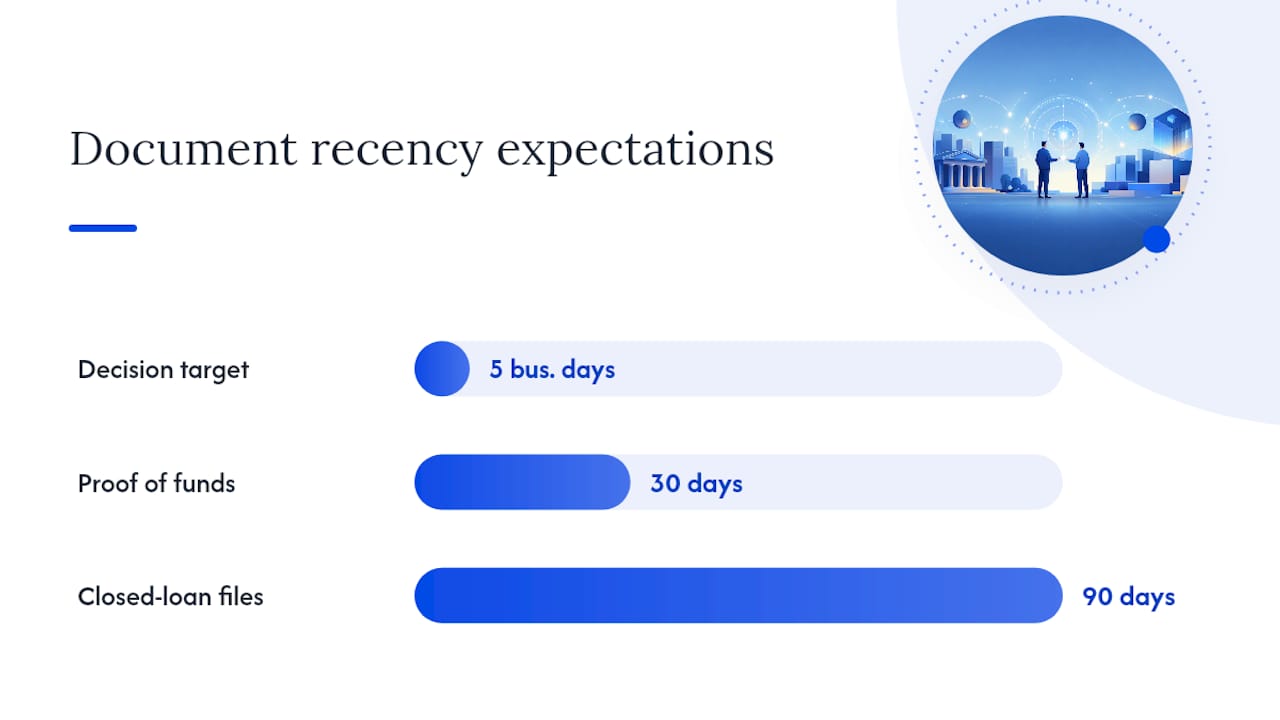
- Proof of funds: bank statement, warehouse line letter, or custodian confirmation dated within 30 days
- Two to three redacted closed-loan files showing funded amount, close date, and draw history
- A sample signed closing disclosure from a recent transaction
- Entity organizational documents (articles of incorporation or LLC operating agreement)
- State license number where applicable, with instructions to verify it independently
How to validate each item:
- Call the title or escrow company listed on the sample closing disclosure and confirm the transaction closed
- Run the entity name through the Secretary of State’s business search in the lender’s state of formation
- Verify any license number through your state’s Department of Financial Institutions or equivalent registry
- Confirm licensing and disclosures, and have a real estate attorney review loan documents before signing
Pro Tip: Use this short template when requesting files: “To complete our due diligence, we’d appreciate two redacted closed-loan files from the past 90 days, a sample closing disclosure, and contact information for two references we can call this week. We’re targeting a decision within five business days.”

How to build a deal pitch book that speeds lender approval
A concise, data-backed deal package materially improves approval speed. A lender who can understand your deal in 60–90 seconds is a lender who can approve it fast.
- Executive summary (one page). Property address, purchase price, loan amount requested, LTV, ARV, exit strategy, and your experience summary. This is the first thing the lender reads.
- Purchase contract. Current, fully executed, with all addenda.
- Itemized renovation budget. Line-item costs with contractor quotes. Vague budgets slow approvals.
- Project timeline with milestones. Start date, major phases, projected completion, and exit date.
- Comps and ARV support. Three to five recent closed sales within one mile and six months. Use conservative ARV — lenders discount optimistic numbers.
- Contractor resumes or licenses. Especially for ground-up or major renovation projects.
- Exit strategy. Refinance, sale, or rental conversion — with supporting data for each.
- Title and insurance confirmations. Preliminary title report and proof of hazard insurance binder.
Present numbers conservatively throughout. A 10% buffer on your renovation budget and a 5% discount on your ARV signals discipline. Lenders fund operators who plan for problems, not operators who assume everything goes right.
Lender vetting scorecard: a reusable template
Use this table to score every lender you evaluate. Add rows as needed and paste it into your CRM or a shared spreadsheet.
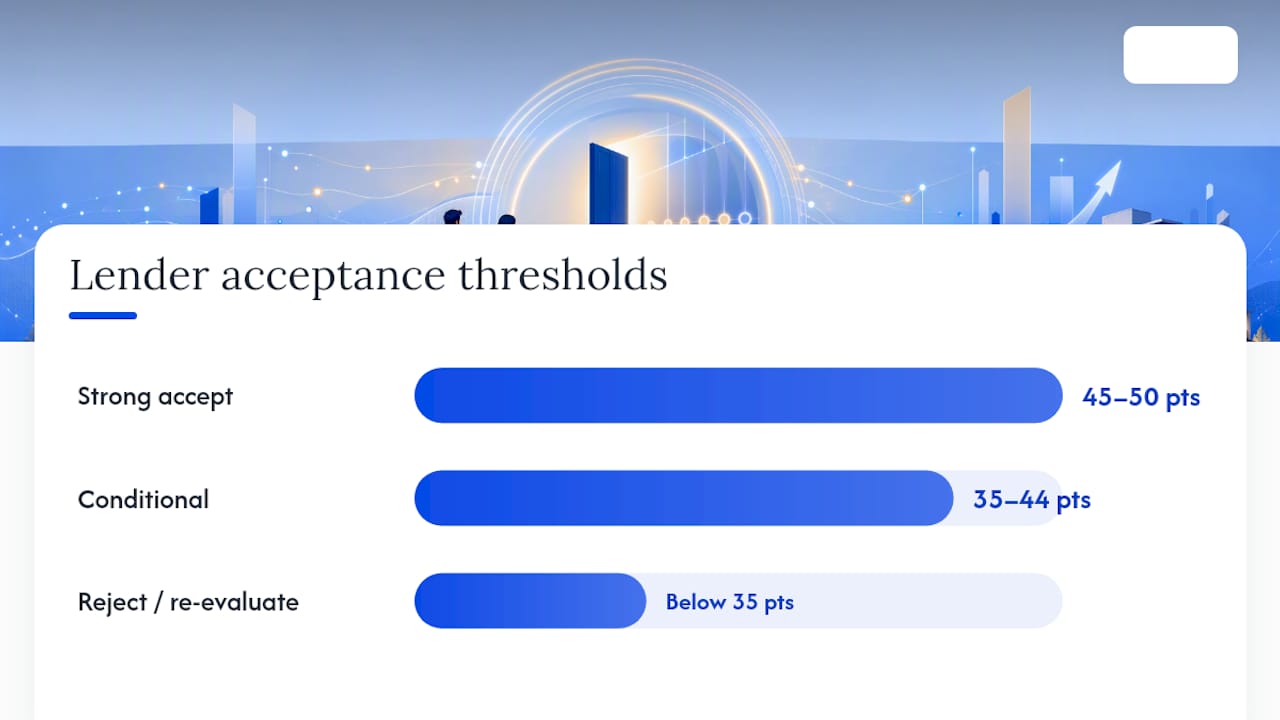
Field What to Capture Score (1–5) Capital source Cash, IRA, HELOC, syndicated, warehouse line 5 = discretionary cash or warehouse Proof of funds Bank statement or warehouse letter dated within 30 days 5 = provided within 48 hrs Sample loan file Redacted closed-loan file from last 90 days 5 = two or more files provided Days to close Stated and confirmed by a reference 5 = 7–14 days, verified Typical LTV As-is and ARV-based limits stated clearly 5 = transparent, in writing Interest rate and points All-in cost of capital, not just headline rate 5 = full fee schedule provided Draw process Lump sum vs. inspection-based tranches, turnaround time 5 = documented, fast turnaround State licensing License number verified in state registry 5 = confirmed active References Two or more recent borrowers, contactable 5 = called and confirmed Red flags Any stop-sign items from Section 4 5 = none identified Scoring: 45–50 = strong accept. 35–44 = conditional (resolve gaps before committing a live deal). Below 35 = reject or re-evaluate after 90 days. Review this scorecard after every closed deal to update your lender’s reliability rating over time. A lender who scores well initially but misses draw timelines on your first deal should drop two points per incident.
For a broker-specific version of this checklist, see the hard money lender vetting checklist for brokers.
Why Capitalfunding fits the reliability criteria
Capitalfunding is a family-office-backed direct lender, which means it controls its own capital rather than syndicating from outside investors. That structure is the single most important factor in eliminating execution risk at closing.
- Speed to close: Capitalfunding closes hard money loans in days, not weeks, a critical advantage on competitive acquisitions.
- Program range: Fix-and-flip loans, ground-up construction, bridge, multifamily, commercial, and rental DSCR loans are all available under one roof.
- High-value deal capacity: Capitalfunding finances ultra-luxury single-family homes above $10 million, a segment most lenders decline.
- Track record: Over $1 billion in closed loans and an A+ BBB rating provide independent, verifiable trust signals.
- Transparency: Underwriting criteria, sample loan documents, and program terms are available before you apply.
Capitalfunding fits best for fast flips requiring a 7–14 day close, ground-up construction projects that need a lender comfortable with complex draws, and high-value or non-standard properties that conventional lenders cannot underwrite. Before reaching out, prepare your executive summary, proof of funds, purchase contract, and renovation budget. That package alone will accelerate your first conversation.
What most investors get wrong when vetting private lenders
The most common mistake is evaluating a lender on rate alone. Rate is one variable in a total cost of capital calculation that also includes points, origination fees, extension fees, and the cost of a delayed close. A lender who quotes 10% with two points and closes in seven days is often cheaper than one quoting 9% with three points who takes 21 days and misses the draw schedule.
The second mistake is skipping reference calls. A reference who confirms that draws arrived on time and the lender answered calls promptly is worth more than any marketing document. The behavioral hallmarks of a consistent lender are simple: clear underwriting criteria stated upfront, draw disbursements that match the agreed schedule, and a named point of contact who responds within 24 hours.
Relationship building matters, too. The investors who get the best terms are the ones who bring clean deal packages, communicate proactively, and close on time. Reliability is a two-way standard. Keep at least two vetted lenders active in your network at all times so a single lender’s capacity constraints never stall your pipeline.
Capitalfunding: a vetted direct lender ready to close
When you need a private lender who can close in days and handle deals other lenders decline, Capitalfunding delivers on both counts. Backed by a family office with over $1 billion in closed loans and an A+ BBB rating, Capitalfunding offers hard money and bridge loan programs built for investors who cannot afford a slow close.

Programs cover fix-and-flip, ground-up construction, commercial bridge, multifamily, and ultra-luxury residential above $10 million. Before you reach out, have your executive summary, purchase contract, renovation budget, and ARV comps ready. That preparation alone will compress your approval timeline. Contact Capitalfunding directly through Capitalfunding to discuss your next deal.
Sources
Use these resources to cross-check any lender’s claims independently.
- Hard Money Loan Lenders: A Strategic Framework for Private Capital Selection in 2026 – JGL CAPITAL LLC
- How Private Lending Works for Real Estate Investors
- How to vet private money lenders for real estate investing
- Private Money: How to Choose the Perfect Lender | BiggerPockets Blog
- Scale Safely with Private Money | Think Realty
- What to Ask Before You Sign a Private or Hard Money Loan
Primary research sources used in this article:
FAQ
What is the fastest way to verify a private lender’s reliability?
Request a redacted closed-loan file and call the title company listed on it to confirm the transaction closed as stated. That single call surfaces more than any marketing document.
How many points and what interest rate are typical for private real estate loans?
Terms vary by deal type, LTV, and market, so always price total cost of capital rather than rate alone. Include origination points, processing fees, and extension fees in your comparison.
Does a private lender need a license to fund real estate loans in the U.S.?
Licensing requirements vary by state and transaction type. Confirm the license number and applicable disclosures for your state, and have a real estate attorney review loan documents before signing.
How quickly can Capitalfunding close a hard money loan?
Capitalfunding closes hard money loans in days as a family-office-backed direct lender, making it a practical option for competitive acquisitions where a 7–14 day close is required.
What should I include in a deal package to get faster lender approval?
Include an executive summary, purchase contract, itemized renovation budget, ARV comps, project timeline, contractor credentials, and exit strategy. A concise, data-backed package materially improves approval speed and reduces underwriting back-and-forth.
Recommended